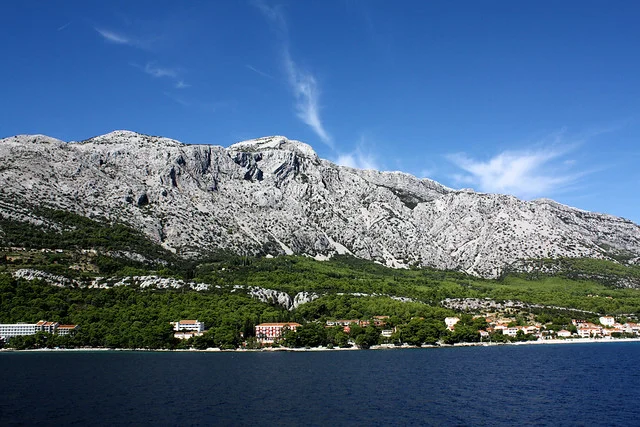
Nestled along the Adriatic Sea, Croatia boasts a diverse landscape of rugged coastlines, turquoise waters, and lush national parks. Its history, dating back to Roman times, is evident in the well-preserved architecture and walled cities like Dubrovnik and Split. Visitors can explore the scenic islands of Hvar, Vis, and Korčula via boat cruises, or venture into lesser-known towns and museums. The country also offers a vibrant farm-to-table food scene and pulsing nightlife, making it a rich destination for both cultural and natural experiences.
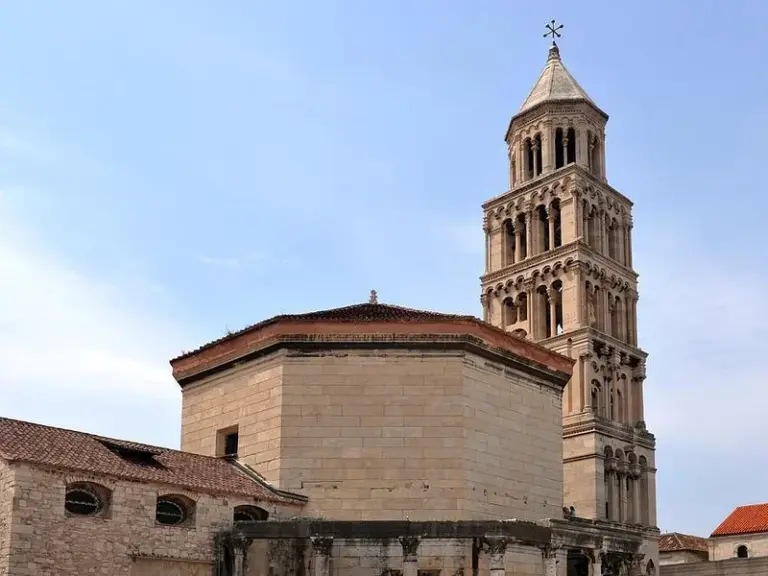
Nestled within the ancient walls of Diocletian’s Palace in Split, the Cathedral of St. Dominus (Katedrala Svetog Duje) stands as a testament to centuries of history. Originally constructed as the […]
Dedicated to the ancient Roman king of gods, the Temple of Jupiter was constructed in the 3rd century as part of Diocletian’s Palace in Split, Croatia. This well-preserved Roman temple […]
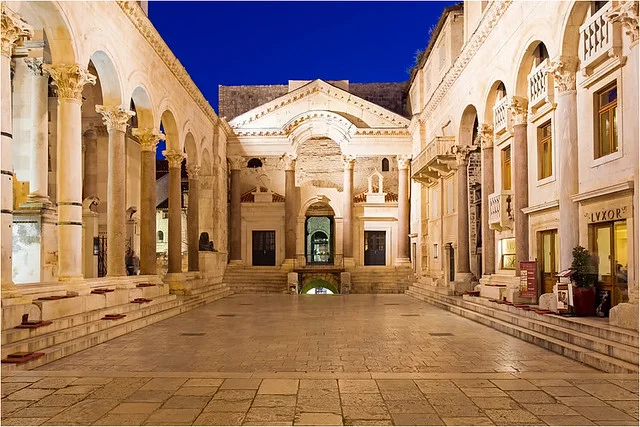
Built in the fourth century as a retirement complex for the Roman Emperor Diocletian, this vast, fortress-like compound still dominates Split Old Town. After its abandonment in the sixth century, […]
The Franciscan Church and Monastery, one of the few structures to withstand the catastrophic earthquake of 1667, stands as a testament to Dubrovnik’s resilience. Nestled within the city’s Old Town, […]
Dating back to the 14th century, the Dominican Monastery in Old Dubrovnik stands as a fortress-like structure that houses a church, cloisters, and a museum. Inside, visitors can explore a […]
In the heart of Dubrovnik’s Old Town, Orlando’s Column stands as a testament to the city’s rich history. Erected in 1418, the column is located in Luza Square and honors […]
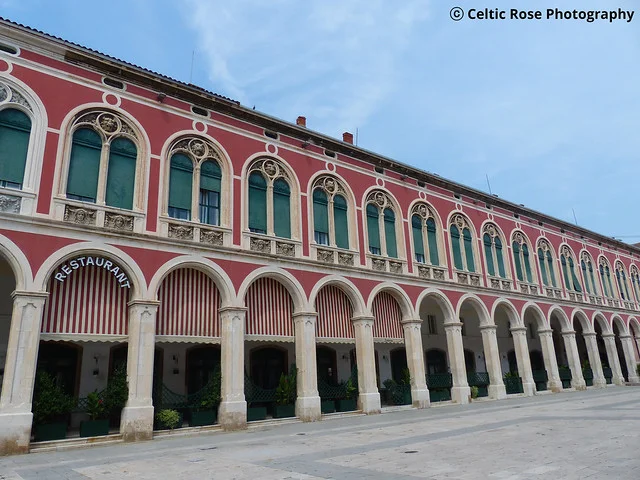
Republic Square, also known as Prokurative, serves as the heart of Split, Croatia’s second-largest city. Inspired by the architecture of St. Mark’s Square in Venice, this expansive square features a […]
Nestled in the heart of Zagreb, the Dolac Market has been a bustling hub for over 80 years. This premier market offers an array of fresh produce and products from […]
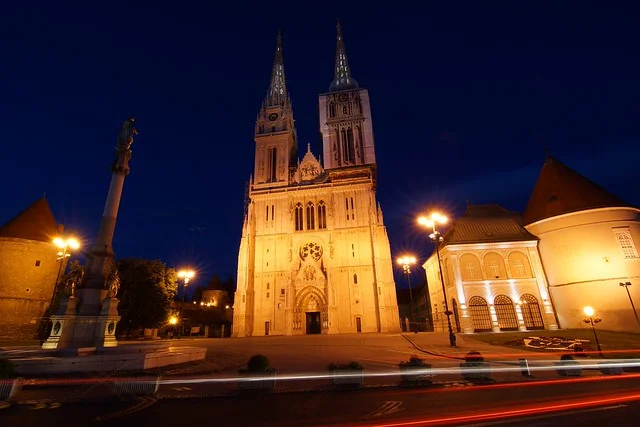
The Zagreb Cathedral of the Assumption of the Blessed Virgin Mary, with its towering spires and neo-Gothic design, stands as a prominent landmark in the Croatian capital. Rising to a […]
Constructed in the 15th century by architect Onofrio della Cava, Onofrio’s Fountain stands as a circular landmark in Dubrovnik’s Old Town. Originally designed as the end point of the city’s […]
Split Old Town, a UNESCO-protected site, dates back 1,700 years and is nestled along the Riva seafront in Croatia’s city of Split. At its heart lies the semi-ruined Roman Diocletian’s […]
Marjan, a hilly peninsula jutting out into the Adriatic Sea, is a nature reserve in Split, Croatia, covered with pine trees and Mediterranean shrubs. This scenic area is home to […]
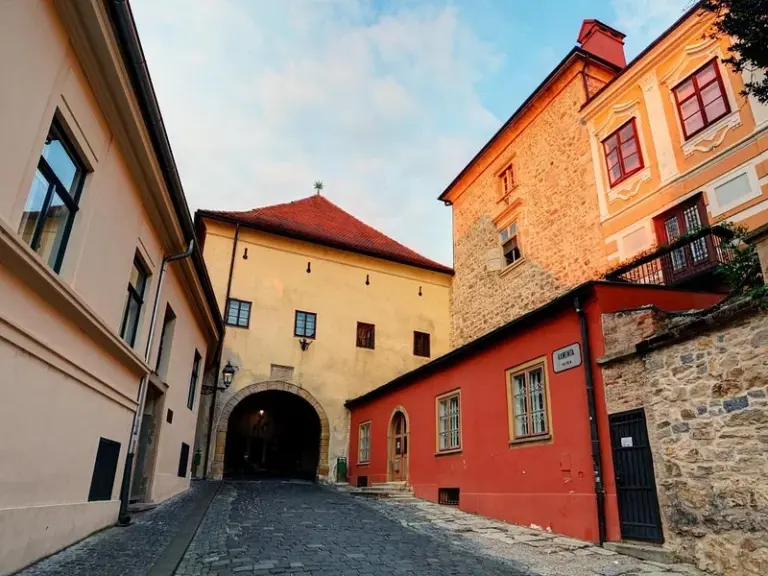
Dating back to the 13th century, the Stone Gate (Kamenita Vrata) stands as one of Zagreb’s oldest and most renowned landmarks. This atmospheric entryway, leading to the medieval Upper Town, […]
Lotrščak Tower, a 13th-century sentinel in Zagreb’s historic Gornji Grad (Upper Town), has served multiple roles throughout its history, including as a defense tower, prison, warehouse, fire station, and even […]
Ban Jelačić Square, also known as Trg Bana Jelačića, serves as the social and geographic heart of Zagreb, Croatia. This bustling, traffic-free square is a hub for both locals and […]
Croatia’s Pelješac Peninsula, extending from the heart of southern Dalmatia, is a haven for those seeking a tranquil escape. This scenic region, free from the bustling tourist resorts and crowds […]
Originating from the Dinara mountain on the Croatia–Bosnia and Herzegovina border, the Cetina River winds over 60 miles (96 kilometers) before emptying into the Adriatic Sea near Split. The river’s […]
Begun in 1461 under the direction of Florentine architect Michelozzo, Fort Bokar (Tvrđava Bokar) was constructed to defend Pile Gate from both land and sea assaults. This cylindrical structure, along […]
Built as a retirement residence for the Roman emperor Diocletian in the 4th century AD, this massive fortress-like palace occupies about half of old town Split. Despite numerous changes over […]
Zrinjevac Park, also known as Nikola Subic Zrinski Square, is a serene oasis in the heart of Zagreb. Established with landscaped gardens and century-old trees, the park offers a tranquil […]
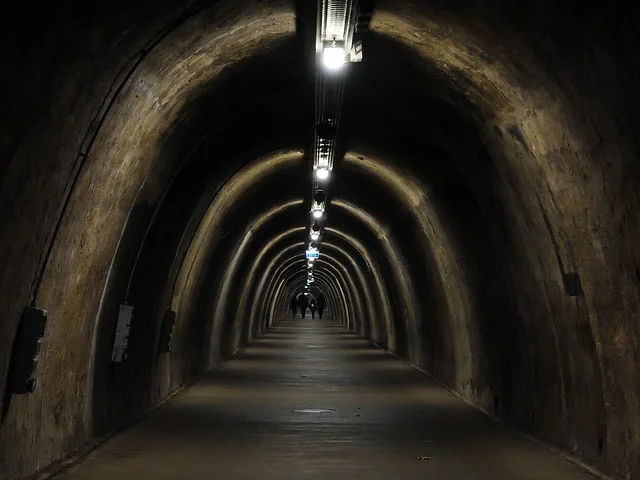
Beneath Zagreb’s Upper Town, the Gric Tunnel (Tunel Gric) serves as a tangible link to the city’s World War II history. Originally an air raid shelter, this subterranean passage connects […]
Built in the early 16th century as the Republic of Ragusa customs house, Sponza Palace (Palaca Sponza) stands as a testament to Dubrovnik’s resilience, having survived the devastating 1667 earthquake. […]
The Ethnographic Museum, also known as the Rupe Museum, is part of a quintet of civic museums in Dubrovnik. Housed in a 16th-century granary, this museum offers a glimpse into […]
Bisected by the wide turquoise ribbon of the Cetina River, the steep cliffs of Cetina Canyon create a striking landscape just a short drive outside of Split, Croatia’s second-largest city. […]
Cookie Consent
We use cookies to improve your experience on our site. By using our site, you consent to cookies.
Cookie Preferences
Manage your cookie preferences below:
Essential cookies enable basic functions and are necessary for the proper function of the website.
Name
Description
Duration
Cookie Preferences
This cookie is used to store the user's cookie consent preferences.