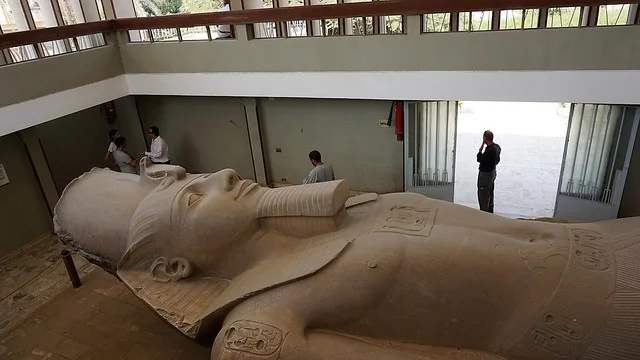
Ramses II, the longest-reigning pharaoh of Ancient Egypt from 1279 BC to 1213 BC, left a lasting legacy through numerous monumental statues. One such statue, a 36-foot (11 m) freestanding red granite figure, was discovered in 1820 by Giovanni Battista Caviglia in Memphis, the ruined ancient capital. Initially broken into six pieces, it was restored in 1955 and placed in Cairo’s Ramses Square. Due to pollution, the 3,200-year-old sculpture was moved to Giza in 2006. In 2018, it was relocated to the Grand Egyptian Museum, set to open in late 2020, where visitors can now admire this colossal representation of one of Egypt’s most powerful rulers.



Travel Themes & Experiences